Source Pilates Stability Training Wunda Chair for Studios, Gyms, Rehab
Explore 30 verified options for the pilates stability training wunda chair, comparing models like LH-B020 and G-PR025 with solid wood construction and customizable features for studios, gyms, and rehabilitation centers.
Key considerations
Products List


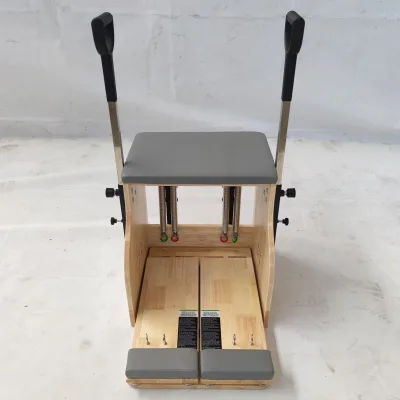
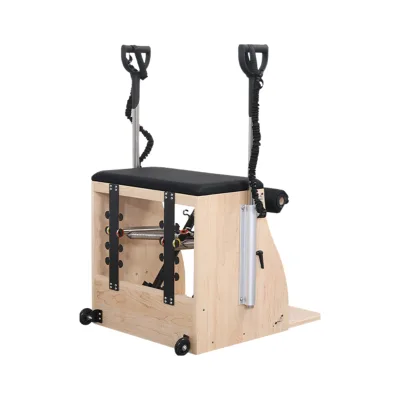
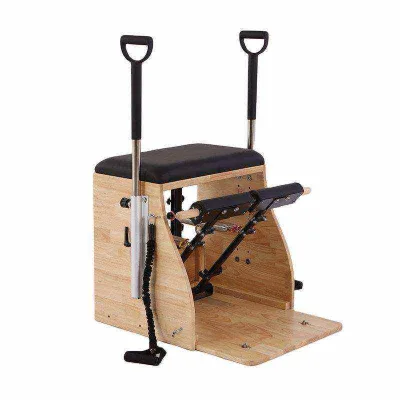
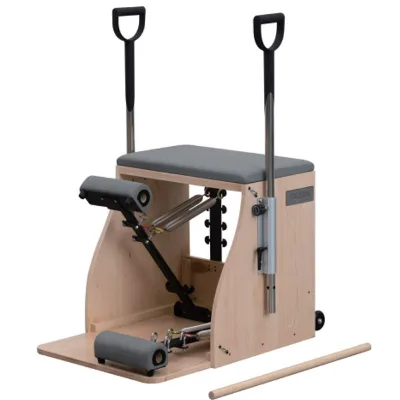


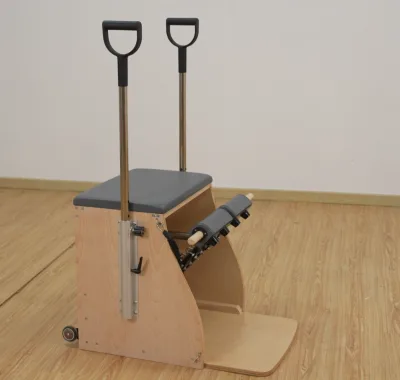
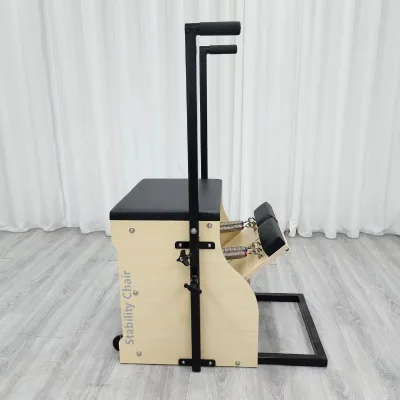
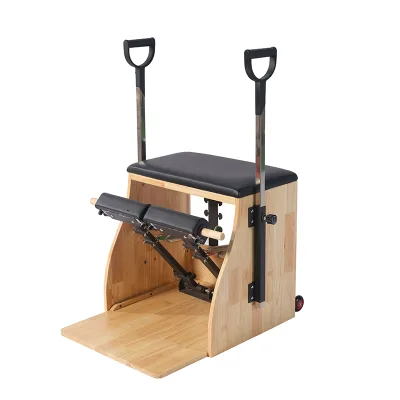
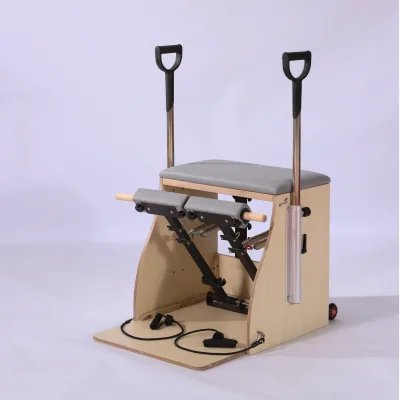


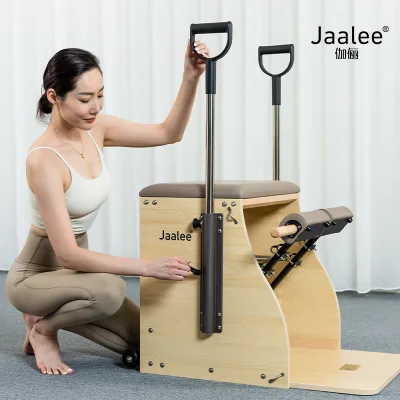

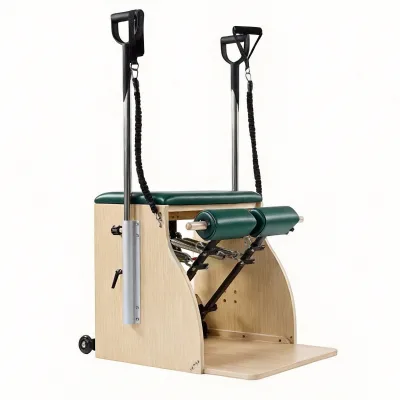
Comprehensive Sourcing Guide
Strategic Sourcing Guide for Pilates Stability Training Wunda Chairs
The global market for professional fitness equipment has seen a significant shift toward specialized stability training tools, with the Pilates Wunda Chair emerging as a cornerstone for both rehabilitation and high-performance conditioning. For procurement professionals and studio owners, sourcing this specific equipment requires a nuanced understanding of technical specifications, material integrity, and supply chain logistics. The Wunda Chair, distinct from the standard Reformer, offers a compact footprint while delivering complex resistance profiles essential for core stability, balance, and lower-body strength. This guide provides a comprehensive framework for evaluating suppliers and products, ensuring that the acquired equipment meets rigorous safety and performance standards without relying on unverified marketing claims.
Technical Specifications and Structural Integrity
When evaluating a Pilates Wunda Chair, the primary focus must be on the dimensional accuracy and load-bearing capacity of the unit. The structural design dictates the safety of the user, particularly when performing advanced jumps or deep squats. Based on available market data, specific models such as the LH-B020 and G-PR series exhibit distinct dimensional profiles that influence their integration into different facility layouts. For instance, the LH-B020 model features a product size of 7106101100mm, while other variants like the Chair02 model measure 906671 cm. These variations are critical for space planning, especially in commercial gyms where floor space is at a premium.
The load capacity is another non-negotiable technical parameter. While some units are rated for standard user weights, high-end commercial models are engineered to support significantly heavier loads. Data indicates that certain robust configurations support a maximum user weight of up to 200kg, whereas other standard commercial units are rated for 150kg. Procurement teams must verify the specific load rating for each model against the intended user demographic. Additionally, the material composition plays a vital role in durability. The preferred material for these chairs is imported solid wood, specifically white maple or oak, which offers the necessary tensile strength and shock absorption. The presence of a jumpboard and box components is standard, but buyers must confirm that all parts are included in the single package to avoid logistical delays.
Compliance, Certification, and Safety Standards
In the B2B procurement of fitness equipment, compliance with international safety standards is paramount, yet specific certification details are often not explicitly listed in general product descriptions. Buyers must operate under the assumption that a product's safety is contingent upon rigorous third-party testing rather than manufacturer assertions alone. While specific certification bodies are not universally mandated in the provided data, the "prod_standard" field often references weight limits or dimensional standards, such as 32kg or specific metric dimensions like 7655.560.5 cm. These figures serve as baseline specifications but do not constitute a safety certification.
Procurement officers should request proof of compliance with relevant regional safety standards, such as EN 957 for fitness equipment in Europe or ASTM standards in North America. The absence of a visible certification label on the product page does not imply non-compliance, but it necessitates a direct inquiry to the supplier regarding their quality assurance protocols. Furthermore, the "Functional Feature" attributes, such as "Anti-slip & Wear-resistant" and "Quiet Operation," are performance claims that require validation through on-site testing or third-party lab reports. Buyers should verify that the anti-slip surfaces on the jumpboard and the chair base meet the friction coefficients required for high-intensity use, ensuring that the equipment remains stable under dynamic loading conditions.
Cost Drivers and Pricing Dynamics
The pricing of Pilates Wunda Chairs is influenced by a complex interplay of material costs, manufacturing complexity, and logistical factors. The observed price range in the current market spans from approximately $130.77 to $650 USD. This wide variance is not merely a reflection of brand prestige but is heavily driven by the quality of the solid wood used, the precision of the mechanical components, and the extent of customization options. Lower-priced units may utilize standard timber or composite materials, whereas premium models command higher prices due to the use of imported white maple or oak and superior finishing techniques.
Beyond the unit cost, the Minimum Order Quantity (MOQ) significantly impacts the total cost of ownership. The market data reveals an MOQ range from 1 PC to 50 units. For small studios or rehabilitation centers, an MOQ of 1 PC or 1 set is highly advantageous, allowing for immediate acquisition without the financial burden of bulk inventory. Conversely, commercial gym chains or large distributors may benefit from negotiating lower per-unit costs by meeting higher MOQ thresholds, potentially up to 50 units. It is essential to note that "Factory Directly Supply" claims can reduce intermediary markups, but buyers must verify the legitimacy of this claim to ensure they are receiving genuine wholesale pricing. The inclusion of a wooden box packaging size of 860680710mm also adds to the shipping volume and cost, which should be factored into the total landed cost calculation.
Typical Applications and User Demographics
The versatility of the Pilates Wunda Chair makes it suitable for a diverse range of applications, from home studios to high-volume commercial facilities. The "Applicable Crowd" data highlights that these chairs are designed for fitness beginners, professional Pilates instructors, rehabilitation training crowds, and yoga enthusiasts. This broad applicability suggests that the equipment must be adaptable to varying skill levels and physical capabilities. For rehabilitation centers, the chair's ability to provide controlled resistance is crucial for patients recovering from injuries, requiring a focus on stability and safety features.
In commercial settings, the "Application Scene" includes home yoga studios, commercial gyms, yoga studios, and rehabilitation centers. The "Type" classification often falls under "Fitness/Yoga" or specifically "Pilates Wunda Chair," indicating its specialized nature. The "Functional Feature" of being "Multi-gear Adjustable" allows for customization of resistance levels, catering to the needs of different user groups within the same facility. Additionally, the "Color: Custom Color" attribute allows facilities to align the equipment with their brand identity or interior design schemes. Buyers should ensure that the chosen model supports the specific movements required for their target audience, such as the ability to perform jumps safely on the jumpboard or execute deep squats with the box included.
Supplier Evaluation and Operational Logistics
Selecting a reliable supplier is as critical as selecting the product itself. The "Place of Origin" for these units is predominantly China, with specific mentions of Jiangsu as a manufacturing hub. While this region is known for its robust manufacturing capabilities, buyers must conduct thorough due diligence on individual suppliers. Key evaluation criteria include the "Production Time," which is listed as 10 working days for certain models. This lead time is a significant factor in inventory planning and should be confirmed with the supplier to avoid delays.
The "Port: All accept" attribute suggests flexibility in shipping logistics, but buyers must clarify which ports are most cost-effective for their destination. The "G.W/N.W" (Gross Weight/Net Weight) data varies significantly across models, ranging from 37kg/32kg to 56kg/32kg, and even up to 51kg/30kg. These weight discrepancies affect shipping costs and handling requirements. Suppliers offering "Customized" logos and "Custom Color" options add value but may extend the production timeline. Buyers should verify the "Warranty" terms, which range from 3 years to 10 years for parts. A longer warranty period often indicates a manufacturer's confidence in their product's durability, but the specific terms and conditions must be reviewed to understand what is covered.
Quality Control and Long-Term Procurement Considerations
Implementing a robust quality control (QC) process is essential for mitigating risks associated with long-term procurement. Given the "10 Years Parts" warranty on some models and "3 years Parts" on others, the expectation for durability is high. Buyers should establish a QC protocol that includes pre-shipment inspections, focusing on the structural integrity of the wooden components, the smoothness of the gear adjustments, and the stability of the anti-slip surfaces. The "Parts: Box, Jumpboard All Including" specification ensures that the unit is complete, but buyers must verify that all components are free from defects such as cracks, splinters, or loose fittings.
Long-term procurement considerations also involve the availability of replacement parts and the ease of assembly. The "Detachable & Assemblable" feature is a significant advantage for maintenance and shipping, but it requires that the assembly instructions are clear and that the hardware is of high quality. The "Customization: Available" attribute allows for branding, but buyers should ensure that the customization process does not compromise the structural integrity of the chair. Finally, the "Factory Directly Supply" claim should be validated to ensure that the supply chain is transparent and that the buyer is dealing directly with the manufacturer, which can facilitate better communication regarding warranty claims and technical support.
Comparative Analysis of Key Product Attributes
To assist in the decision-making process, the following table summarizes the key technical and logistical attributes observed across different models. This comparison highlights the variations in dimensions, weight, and specifications that buyers must consider when selecting the right equipment for their specific needs.
| Attribute | Model LH-B020 | Model G-PR025 | Model G-PR004 | Model Chair02 |
|---|---|---|---|---|
| Product Size | 7106101100mm | 78.55060cm | 76*56cm | 906671 cm |
| Single Package Size | 860680710mm | - | - | 90X66X71 cm |
| Gross Weight | 37kg | 30kg | 30kg | 56kg |
| Net Weight | 32kg | 51kg | 51kg | 51kg |
| Material | - | - | - | White Maple or Oak |
| Load Capacity | - | - | - | 200kg |
| Warranty | 10 Years Parts | 3 Years Parts | - | - |
| MOQ | 1PC | 1set | 1set | 1PC |
| Production Time | 10 Working Days | - | - | - |
| Origin | China | Jiangsu, China | Jiangsu, China | China |
This comparative overview underscores the importance of matching specific model attributes to the buyer's operational requirements. Whether prioritizing load capacity, dimensional constraints, or warranty coverage, the data provided offers a clear basis for making informed procurement decisions. By adhering to these guidelines, buyers can ensure the acquisition of high-quality Pilates Wunda Chairs that meet the rigorous demands of modern fitness and rehabilitation environments.
FAQs
What materials are used for the pilates stability training wunda chair?
The chairs are constructed from imported solid wood, specifically white maple or oak. This material selection ensures high tensile strength and shock absorption for safe, long-term use in commercial or home settings.
Can I customize the logo and color of the pilates stability training wunda chair?
Yes, both logo and color customization are available for these units. Buyers can request specific branding or colors to match their studio identity, though this may impact the standard production timeline.
What is the maximum user weight capacity for the pilates stability training wunda chair?
Certain robust models support a maximum user weight of up to 200kg, while other standard commercial units are rated for 150kg. Buyers must verify the specific load rating for each model against their intended user demographic.
How long is the production time for the pilates stability training wunda chair?
The standard production time is listed as 10 working days for specific models. This lead time is a critical factor for inventory planning and should be confirmed with the supplier before placing an order.
What warranty coverage is provided for the pilates stability training wunda chair parts?
Warranty terms vary by model, with some offering 10 years of parts coverage and others providing 3 years. A longer warranty period often indicates manufacturer confidence in product durability, but specific terms must be reviewed.
Which dimensions are standard for the pilates stability training wunda chair models?
Product sizes vary by model, with options like 710*610*1100mm or 90*66*71 cm available. These dimensional variations are critical for space planning, especially in commercial gyms where floor space is at a premium.
What is the minimum order quantity for the pilates stability training wunda chair?
The minimum order quantity ranges from 1 PC to 50 units depending on the supplier and model. Small studios can acquire single units, while larger distributors may negotiate better rates by meeting higher volume thresholds.